
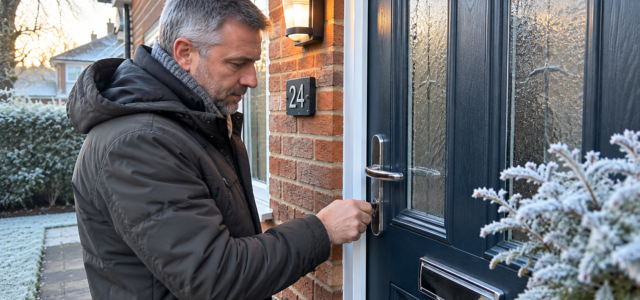
Composite Door Lock Problems in Cold Weather in Earley: Causes and Repairs
If your composite front door becomes increasingly difficult to lock as the temperature drops, you may be experiencing a seasonal problem affecting the door’s alignment or locking mechanism.
During the colder months, homeowners may notice that the handle becomes stiffer, the key requires more effort to turn or the door needs additional pressure before it locks securely.
Although these problems may initially appear minor, repeatedly forcing a stiff locking mechanism can lead to more expensive repairs.
ASAP Locksmiths provides residential door lock repairs in Earley and the surrounding Reading area, helping homeowners identify and resolve faults with their composite and UPVC locking systems.
Why Do Composite Door Locks Become Stiff in Cold Weather?
Composite doors are manufactured using a combination of materials that can respond differently to changes in temperature.
As temperatures fluctuate, small changes in the dimensions of the door and surrounding frame can affect how accurately the locking points line up.
The colder weather may also make an existing mechanical or alignment problem more noticeable.
Common contributing factors include:
- Seasonal movement within the door and frame
- Locking points becoming misaligned
- Existing wear within the gearbox
- Moisture affecting lock components
- Deteriorating lubrication within the mechanism
- Additional resistance caused by door seals
A locking system that was already under strain during the summer may become noticeably harder to operate during winter.
Why Does My Composite Door Lock Properly During the Day but Not at Night?
If your door becomes more difficult to lock during colder evenings but operates more smoothly during the day, temperature-related movement could be contributing to the problem.
Even relatively small changes in alignment can affect how the locking hooks and bolts engage with their corresponding keeps in the door frame.
However, temperature changes do not necessarily mean the door itself is defective.
An existing alignment issue or worn locking component could be making the mechanism more sensitive to changing conditions.
A locksmith can inspect the locking system to establish whether an adjustment or mechanical repair is required.
Signs That Cold Weather Is Affecting Your Door Lock
Common symptoms include:
- The door becomes harder to lock on particularly cold mornings.
- The handle requires more effort to lift.
- The key becomes increasingly stiff.
- The door needs to be pushed firmly before it locks.
- Locking problems improve when temperatures rise.
- The mechanism produces unusual clicking or grinding noises.
- The door locks normally when open but becomes difficult to secure when closed.
If these symptoms become more frequent, it is worth arranging an inspection before the mechanism fails completely.
Could the Multi-Point Locking Mechanism Be Damaged?
Most composite doors use a multi-point locking mechanism that secures the door at several positions along its edge.
These locking points must align correctly with the corresponding keeps in the frame.
When seasonal movement creates additional resistance, operating the handle and key can place excessive pressure on the central gearbox and other internal components.
Over time, this can contribute to premature wear or mechanical failure.
For more information about developing locking faults, read our guide to lock mechanism repairs in Earley.
Can a Composite Door Lock Freeze?
Although less common, moisture entering an exposed lock cylinder can freeze when temperatures fall sufficiently.
This may prevent the key from entering or turning normally.
However, not every lock that becomes stiff during winter is frozen. Mechanical wear, alignment problems and damaged cylinders can produce similar symptoms.
Avoid pouring hot water into the lock or applying excessive pressure to the key. Introducing additional moisture may make the problem worse when temperatures fall again.
If the lock remains difficult to operate, a professional inspection can help identify the cause.
Should You Lubricate a Stiff Composite Door Lock?
Appropriate lubrication can help maintain certain locking components, but it is not a universal solution.
Different cylinders and locking mechanisms may require different types of lubricant, and using an unsuitable product can attract dirt or interfere with internal components.
Always follow the lock manufacturer’s maintenance recommendations.
If the underlying issue is poor alignment or a damaged gearbox, lubrication alone is unlikely to provide a lasting solution.
Can a Locksmith Adjust a Composite Door Lock for Winter?
Yes. Where the problem is caused by locking alignment, an appropriate adjustment may restore smooth operation.
A locksmith can inspect the relationship between the door’s locking points and the corresponding frame keeps, alongside the condition of the cylinder, gearbox and mechanism.
Depending on the findings, the work may involve realigning the locking system, adjusting the keeps, servicing appropriate components or replacing worn parts.
The objective is to restore reliable locking without replacing components unnecessarily.
How Can You Prevent Winter Locking Problems?
Although some seasonal movement is unavoidable, homeowners can reduce unnecessary strain on their locking systems by:
- Avoiding excessive force when operating the handle or key
- Investigating changes in locking resistance early
- Following the manufacturer’s maintenance recommendations
- Keeping accessible lock components clean
- Arranging professional repairs when locking problems become persistent
Addressing relatively minor faults before winter conditions make them worse may help prevent a more inconvenient mechanical failure.
Will I Need a New Composite Door?
Not necessarily.
Many composite door locking problems can be resolved by adjusting the locking alignment or repairing individual components.
A faulty cylinder, gearbox or multi-point locking mechanism does not automatically mean the entire door needs replacing.
A professional locksmith can assess the condition of the locking system and determine the most appropriate repair.
Composite Door Lock Repairs in Earley
If your composite door becomes difficult to lock during cold weather in Earley, don’t ignore the warning signs.
Seasonal alignment changes, worn components and developing gearbox faults can all contribute to unreliable locking.
ASAP Locksmiths provides residential lock repairs, including work on composite and UPVC door locking mechanisms, cylinders, gearboxes and locking alignment.
Having the fault investigated early can help restore smooth operation and reduce the likelihood of a complete mechanism failure during the winter months.
For professional assistance, visit our locksmith services in Earley or contact ASAP Locksmiths.

Comments are closed.